Sunday, June 30, 2019

DE-8235695

The Swabian Jura, sometimes also named Swabian Alps in English, is a mountain range in Baden-Württemberg, Germany, extending 220 km (140 mi) from southwest to northeast and 40 to 70 km (25 to 43 mi) in width. It is named after the region of Swabia. - in: wikipedia

© Verlag Hans-Jürgen Daubner
DE-8235695, sent by Andrea.
This region's hallmarks are its gleaming white rock formations, mighty castles and magnificent palaces of notable dynasties, juniper scrubs where shepherds tend their flocks, delightful dry valleys, crystal-clear springs and subterranean wonderlands of dripstone caves, crater lakes, religious buildings in Romanesque or Gothic style and idyllic villages full of half-timbered houses. - in: https://www.germany.travel/en/leisure-and-recreation/scenic-routes/swabian-alb-route.html
On the card we can see some attractions of this region. Beuron; Lichtenstein Castle; Sigmaringen Castle; Blaubeuren; Uracher Waterfall; Hohenzollern Castle; Donautal; Winsener Höhle, a water cave; Blautopf; Bad Urach and Bärenhöhle. 

FR-1134691 & FR-1175148

I don't get official cards from France that often, is always nice to find them in my mailbox. These two are from L'Isle-sur-la-Sorgue and Côte d'Opale. 

FR-1134691, sent by Fabienne.
This is one of the several water wheels in the L'Isle-sur-la-Sorgue, a town in the Sorgue river in southeastern France.

Photos © Christophe Potigny; © Fotolia; © agefotostock.com; © Photos TIERNY
FR-1175148, sent by Fleur.
The Côte d'Opale is a French coastal region bordering Belgium, situated opposite the cliffs of the south-east of England, facing the English Channel and the North Sea. It ccontains varied landscapes like beaches, dunes, swamps, estuaries or cliffs. 

Cazorla - Spain

A few weeks ago Celina went to Andaluzia in Spain to hike in the Sierra de Cazorla. Cazorla, where this card is from, is the entry point and base for visits to the Natural Park of Sierras de Cazorla, Segura y Las Villas Natural Park, a vast protected area of magnificent river gorges and forests.

La Yedra Castle, also known as Las Cuatro Esquinas Castle (Four Corners Castle), was built by Christians during the 13th and 14th centuries and during the papacy of don Pedro Tenorio.
Still higher up on the rocky escarpment lie the ruins of still yet another ruined fortress.

Friday, June 28, 2019

PT RR - Group 136 * Surprise May

May's cards from the portuguese RR.

 © Uitg. Thill, N. V., Brussel
I've visited Brugge once and loved it ❤️ when people ask me what is the most beautiful place or places I've been to, Brugge is always one of my answers. 
This beautiful building in Burg Square is the Old Civil Registry, built between 1534 and 1537. It is a fascinating specimen of the Flemish Medieval architecture. 
The card was sent by Ana.

 ©Edit. Thill, S. A., Bruxelles
Rui also sent a belgian card. I didn't get to visit the Basilica of the Sacred Heart when I visited Brussels. 
Located in the outskirts of Brussels, in the neighbourhood of Koekelberg, the Basilica of the Sacred Heart (Sacré-Coeur Basilica) is an architectural masterpiece from the twentieth century.
The church was established to commemorate the 75th anniversary of Belgian independence. King Leopold II lay down the first stone in 1905, but the temple was completed many years later in 1971 due to construction being stopped during World War I and World War II.
The first thing visitors will spot is its enormous green-coloured dome contrasting with the red coloured terracotta stones of the church. The interior is vast and from inside too, visitors find themselves immediately drawn to its beautiful dome. - in: https://www.introducingbrussels.com/basilica-of-the-sacred-heart?_ga=2.128225737.49772065.1561578969-1627593971.1558130557

Forways Lda
The Sanctuary of Fátima annually welcomes hundred of thousands of pilgrims and tourists. Many come to participate in the celebrations that commemorate the apparitions of Our Lady to the three witness of Fátima. May is the month of the biggest pilgrimage. According to the sanctuary this year there were about 30 to 35 thousand pilgrims who went to Fátima on foot and 191 groups of pilgrims from 40 countries participated in the celebrations.
This card was sent by Liliana.

Oswaldo Santos * Papyrus
Paulo was trying to choose a card to send me but only at the 3rd try he could find one I still didn't have. Alandroal is a municipality in the Portuguese district of Évora located on the eastern frontier with Spain along the right margin of the Guadiana River in the Central Alentejo region.

Monday, June 24, 2019

Monthly Fav. Surprise RR - June '19

Rainy days are perfect to stay home writing letters, cards and updating blogs. This morning I "travelled" from South Africa to South America and now I'm back to Europe with the cards I got this month in the MFS RR. The cards are from England, Finland, Germany and France.

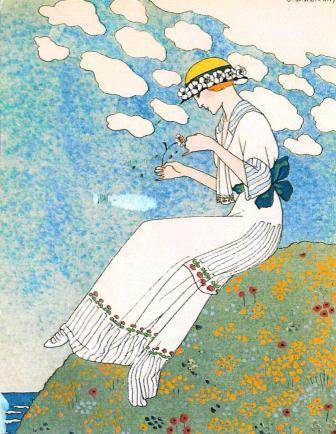
This isn't my kind of card but Cláudia only realized that after writing and stamping it. I don't completely dislike drawing, illustrations or paintings, I just don't collected them. 

Photo: Taneli Eskola 2010
I absolutely love this card, maybe because this view is still very vivid in my mind. Exactly 2 weeks ago I was in Helsinki. 
If you arrived in Helsinki by ferry from Tallinn or Stockholm bt ferry or from any other part of the world by cruise ship, you'll get to see this nice view. 
Kiitos Heli.

Foto: © D. Radke
New palaces are always very appreciated. Ludwigslust Palace is located in Ludwigslust in northern Germany. The card was sent by Gabi.
The splendid Baroque Ludwigslust Palace, situated in an extensive park with avenues, cascades, canals and water jumps, is considered the "Versailles of the north". Frederick, Duke of Mecklenburg- Schwerin had it built between 1772 and 1776 according to plans by court architect Johann Joachim Busch as the centre of Ludwigslust's Late Baroque urban complex. Until 1945 the palace was inhabited by the dukes. As a result, the historically evolved atmosphere was preserved. In March 2016 the east wing of the palace was ceremonially reopened after extensive restoration work. - in: https://www.off-to-mv.com/en/destinations/a-schloss-ludwigslust

Photo by L. Villoing
This card was sent by Désirée from the Netherlands but the palace on it is one of the most famous in France. 
The Palace of Fontainebleau, located 55 kilometres (34 miles) southeast of the center of Paris, in the commune of Fontainebleau, is one of the largest French royal châteaux. The medieval castle and subsequent palace served as a residence for the French monarchs from Louis VII to Napoleon III. Francis I and Napoleon were the monarchs who had the most influence on the Palace as it stands today. It is now a national museum and a UNESCO World Heritage Site. - in: wikipedia

São Paulo's Cathedral - Brazil

I believe these are all my cards from São Paulo's Cathedral. The 1st card was sent by José, two are officials and the other two were sent by Márcio, a former penpal.
I've been to São Paulo in 2016 and I had the opportunity to visit this cathedral. 

Mundial Com. de Postais Lda.
The São Paulo Cathedral is a cathedral of the Roman Catholic Archdiocese of São Paulo, Brazil. It is the largest cathedral in South America.
The Cathedral is located in the city center of São Paulo, just off of the main square of the city, Praça da Sé.
It is the city’s main cathedral, that can hold up to 8,000 people making it the largest church in São Paulo. The São Paulo Metropolitan Cathedral is 111 meters long by 46 meters wide and has two towers with a height of 92 meters and also a dome that reaches over 30 meters.

Foto: Sérgio O. Rehder
BR-358683, sent by Ana.
The cathedral was designed by German Maximilian Emil Hehl and is neo-gothic structure, with a Renaissance-styled dome,
inspired by the Renaissance dome of the Cathedral of Florence. The construction of the cathedral began in 1913 on the site of the demolished colonial cathedral.
However, due to the world wars, the work proceeded slowly and the inauguration of the new Cathedral happened in 1954, with the unfinished towers, but in time for the celebration of Sao Paulo’s 400th anniversary. The towers were eventually completed in 1967. 

Over 800 tons of rare marble were used to construct the Catedral da Se. All mosaics, sculptures and furniture that make up the church were brought by ship from Italy.

Postais do Brasil
BR-509403, sent by Giuliana.
Along with the usual saints and angels, the interior of the cathedral is decorated with stained glass windows, marble, sculpted Brazilian produce such as coffee branches, exotic fruits, and native animals. The cathedral sits upon a large crypt that has the tombs of all bishops and archbishops of São Paulo.

The crypt is located beneath the main altar and has the tombs of all bishops and archbishops of Sao Paulo and several important figures in Brazil’s history. - in: http://www.brazilmycountry.com/sao-paulo-attractions/sao-paulo-cathedral/

ZA-143532

The Afrikaans Language Monument is a famous South African landmark. It honors the birth and growth of Afrikaans, one of the eleven official languages of South Africa.

Photograph: Gerald Hoberman
ZA-143532, sent by Margaretha.
The Afrikaans language, spoken mainly in South Africa and Namibia, originated as a dialect of Dutch, brought to the Cape area by settlers from the Dutch East India Company in the late 17th century.
Over time, Afrikaans evolved into a distinct language with strong influences from other African languages, like Khoikhoi, Nguni, and Sotho, as well other European languages like French and Portuguese. The monument’s design reflects this progression.
The Afrikaans language became closely intertwined with South Africa’s political history, especially after the Anglo-Boer war of 1899-1902, when there was a strong push to establish English as the language of intellect. As a response against this, organizations were created to promote Afrikaans and the Afrikaner culture. In 1925, it was recognized as an official language with its own African identity, separate from its parent Dutch. However, the language’s most famous word became “apartheid,” meaning “apartness,” after the racial segregation policy in the mid-20th century. Afrikaans itself came to be associated with white supremacy, and was tangled in controversy all through the later half of the century. 
The monument designed by Jan van Wijk is a granite tribute to this tumultuous history. The sculptor won a competition to design the structure, which was opened in 1975, 50 years after the language was given official status. - in: https://www.atlasobscura.com/places/afrikaans-language-monument